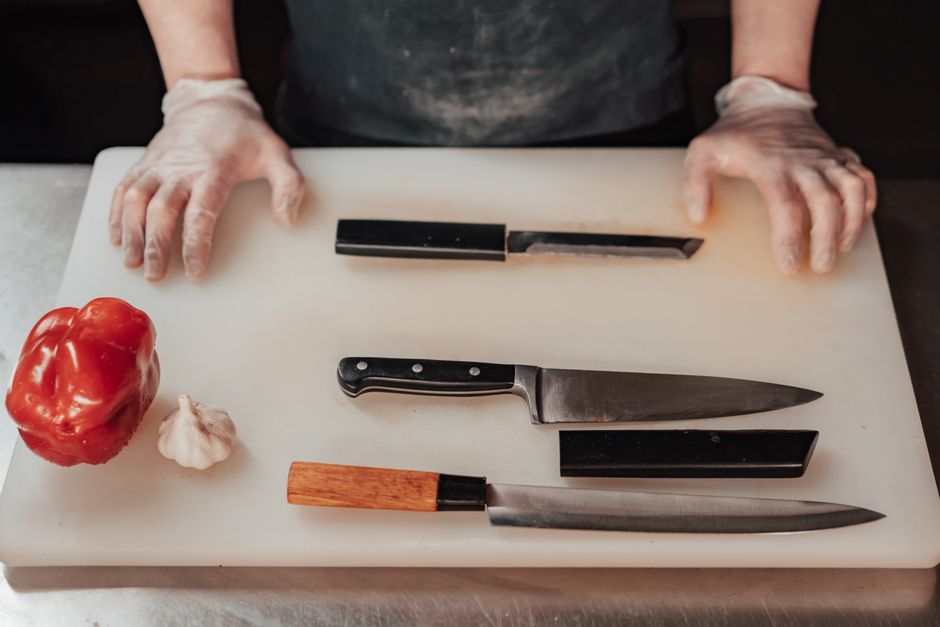
Photo: Mikhail Nilov / Pexels
The ceramic versus stainless steel knife debate isn't about finding a universal winner—it's about matching the right material to your cooking habits, maintenance commitment, and kitchen priorities. Both materials excel in different scenarios, and understanding their specific strengths and weaknesses will help you make an informed decision for your kitchen.
Ceramic knives hold their edge 10-15 times longer than stainless steel and won't rust or react with acidic foods, making them attractive for cooks who prioritize sharpness and low reactivity. However, stainless steel knives offer superior durability, easier maintenance, and better performance on tougher cutting tasks—which is why most professional chefs and home cooks still rely on them as their primary workhorse.
Check the blade hardness rating (ceramic typically ranges 8-9 on the Mohs scale versus stainless steel's 5-7) and match it to your cutting style, since ceramic holds a sharper edge longer but chips more easily if you use a rocking motion, while stainless steel requires more frequent sharpening but tolerates aggressive cutting techniques.
This guide breaks down the real differences between ceramic coated knives, pure ceramic blades, and quality stainless steel options, so you can decide which material (or combination) belongs in your kitchen.
Pure ceramic knives feature a blade made entirely from zirconium oxide ceramic material. These knives maintain an exceptionally sharp edge for extended periods and naturally resist corrosion, rust, and staining. They won't react chemically with acidic foods like tomatoes or citrus, and they have a hygienic surface that resists bacterial growth.
The tradeoff is brittleness: ceramic blades are prone to chipping or breaking if dropped, mishandled, or used on hard surfaces like frozen foods or bone. They also cannot be resharpened at home and require professional sharpening services, which adds to the long-term cost. Additionally, they're heavier than some users expect, and many require hand washing to prevent coating damage.
Best for: Home cooks who prioritize edge retention, handle knives carefully, slice vegetables and boneless proteins frequently, and are willing to invest in professional sharpening services.
Ceramic coated knives feature a traditional steel blade with a ceramic coating applied to the surface. This hybrid approach combines some benefits of ceramic edge retention with the underlying durability of steel. They resist staining and corrosion better than uncoated stainless steel and maintain sharpness longer than traditional steel.
The ceramic coating can chip if the knife is banged around in a dishwasher or knife block, so careful hand washing and storage is essential. Many ceramic coated knives are not dishwasher-safe, and the coating degrades over time with heavy use. Unlike pure ceramic, the underlying steel can be resharpened if the coating wears away, but recoating is expensive and often impractical.
Best for: Cooks seeking a middle ground between ceramic sharpness and steel durability, who prioritize careful storage and hand washing, and want extended edge retention without full ceramic brittleness.
Stainless steel knives remain the industry standard for everyday kitchen use. They're durable, forgiving, and handle a wide variety of cutting tasks—from delicate vegetables to tough cuts of meat and bone. They can be easily resharpened at home with standard sharpening tools or sent for professional sharpening, making them cost-effective over time. Stainless steel is resistant to rust and corrosion, though it can stain and requires regular maintenance.
The primary tradeoff is edge retention: stainless steel blades don't stay sharp as long as ceramic alternatives and require more frequent sharpening. However, the ease of maintenance, versatility, and durability make stainless steel the more practical choice for most home kitchens, particularly those with multiple household members or less-than-gentle handling habits.
Best for: Most home cooks, families, professional kitchens, and anyone prioritizing durability, versatility, and low-maintenance care over maximum edge retention.
For most home cooks: choose stainless steel. It's the safer, more versatile choice that handles a broader range of tasks, forgives occasional rough treatment, and costs less to maintain. Stainless steel works for families, casual cooks, and anyone who values durability and convenience over having the sharpest possible edge.
For careful, technique-focused cooks: ceramic is worth considering. If you slice vegetables regularly, handle knives with intention, hand-wash and store carefully, and are willing to invest in professional sharpening, ceramic's superior edge retention and food non-reactivity can justify the higher cost and fragility. Use ceramic as a specialized tool for your most common tasks, not your only knife.
Ceramic coated knives occupy a middle ground but often deliver the worst of both worlds: they require careful maintenance like ceramics but don't retain the edge as impressively, and they lack the resharpening convenience of pure stainless steel. For most buyers, this option is worth skipping in favor of committing to either full ceramic or stainless steel.
Consider your actual kitchen habits (How often do you cook? Are knives handled roughly? Do you drop things?), your sharpening tolerance (Can you afford professional service or do you want easy home sharpening?), and your primary cutting tasks (Mostly vegetables, or mixed proteins and produce?) before deciding. Neither material is objectively better—the right choice depends on which tradeoffs matter most to you.
Ceramic knives stay sharp approximately 10-15 times longer than stainless steel. This means if a stainless steel knife needs sharpening after regular weekly use, a ceramic knife might go months before requiring attention. However, this advantage diminishes if you use ceramic on hard surfaces or drop it, which can chip the blade and require professional replacement.
No. Ceramic blades are too hard to sharpen with standard home sharpening tools and require professional sharpening services, which can be expensive and inconvenient. This is a significant long-term cost factor that should be considered before purchasing ceramic knives. Stainless steel can be sharpened at home with a whetstone, honing steel, or electric sharpener.
Most ceramic and ceramic coated knives are not dishwasher-safe because the heat and abrasive motion can damage the ceramic coating or cause chipping. Always verify the manufacturer's care instructions. Hand washing is recommended, which requires additional time and care. Standard stainless steel knives are typically more forgiving in dishwashers, though hand washing is still preferred for all quality knives.
Ceramic knives are naturally resistant to rust and staining because the material doesn't oxidize like steel. They also won't react chemically with acidic foods. This makes them excellent for slicing tomatoes, citrus, or other acidic ingredients without discoloration. Stainless steel can stain but is rust-resistant with proper care.
Stainless steel is significantly better for cutting meat, poultry, and bone. Ceramic is too brittle for these tasks and can chip or break under the pressure required. Reserve ceramic knives for slicing vegetables, fruits, and boneless proteins. Stainless steel's durability and flexibility make it the correct choice for all-around meat preparation.
Found this helpful? Share it!
Our team reviews cookware, appliances, and kitchen gadgets for home chefs so you don't have to. Every recommendation is based on real research: customer reviews, expert opinions, and value for money. Learn more about us →
This post contains affiliate links. We may earn a commission if you purchase through our links at no extra cost to you.
← Back to Best Kitchen Picks Daily| Retailer | Price Range | Shipping | Link |
|---|---|---|---|
| Amazon | Check Current Price | Free (Prime) | View on Amazon → |
| Walmart | Check Site | Free over $35 | Search → |
| Target | Check Site | Free over $35 | Search → |
Prices may vary. Click through to each retailer for current pricing.