Affiliate Disclosure: As an Amazon Associate, we earn from qualifying purchases. Clicking our links costs you nothing extra and helps us keep reviewing products for free.
By Best Kitchen Picks Daily • September 03, 2026 • Contains affiliate links
Harvest season is the sweet spot for outdoor cooking. The bugs are gone, the air is crisp, and nobody minds standing next to a hot cooking surface for an hour. But it's also the season when a lot of people finally pull the trigger on a new outdoor cooker — and the first fork in the road is always the same: griddle or grill?
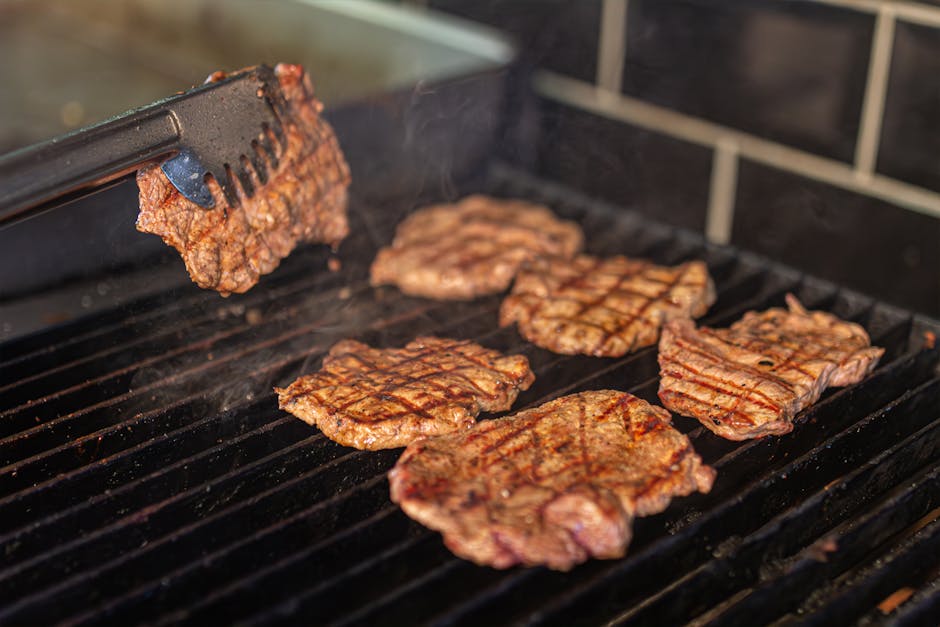
The honest answer is that the two do genuinely different jobs. A grill gives you grate marks, fat drip, smoke flavor and high radiant heat — the stuff steaks, chicken thighs and burgers love. A flat-top griddle gives you edge-to-edge conductive heat, which means smash burgers with a real crust, hash for 12 people, fajita veggies that don't fall through, and Sunday breakfast for the whole family in one pass. If you're cooking for a crowd of relatives who arrived at different times, the griddle usually wins on logistics alone.
When evaluating Griddle vs. Grill: Which Outdoor Cooker Should You Buy for Harvest Season Cookouts?, the key factors to consider are build quality, long-term durability, and whether it genuinely solves the problem it claims to address.
Below we compare four brands that actually compete in this space at the moment: Big Horn Outdoors, Blackstone, Weber and Camp Chef. We'll be specific about price, build and features — and we won't pretend one brand is the right answer for everyone, because it isn't.
Big Horn Outdoors has built its catalog around the idea that you shouldn't have to buy four separate appliances to cook outdoors. Their lineup spans propane and wood-fired pizza ovens, portable grills, flat-top griddles and compact camping stoves, and the pricing generally lands 20–40% under the equivalent name-brand unit. Their portable pizza ovens (the 12-inch propane models in particular) typically sit in the $150–$250 range against $400+ for comparable branded competitors, and their griddle/grill combo units are aimed squarely at the person who wants one cart on the patio, not three. Build quality is solid mid-tier: powder-coated steel bodies, cold-rolled steel griddle plates, stainless burners on the higher trims. What you're trading away is dealer density and the deep accessory ecosystem the bigger names have. If you like the idea of a griddle and a pizza oven for the price of one Blackstone 36, that's the pitch. Browse the current Big Horn Outdoors range here.
Blackstone — the flat-top specialist
Blackstone effectively created the backyard griddle category in the US and it shows. The 36" 4-burner (around $400–$500 depending on trim and season) delivers roughly 60,000 BTU across four independently controlled zones and about 768 square inches of cooking surface — genuinely enough for 28 smash burgers at once. Their advantage isn't the steel; it's the ecosystem. Air fryer drawers, griddle hoods, rear seasoning racks, hard covers, replacement plates and a huge secondhand market mean a Blackstone is easy to live with for a decade. The downside: it is a griddle, full stop. You can't get grate char or true smoke flavor on it, their grill-hybrid attempts have been lukewarm, and the cold-rolled steel top demands seasoning discipline or it will rust over a damp autumn.
Weber — the grill benchmark
If you want a grill and not a flat top, Weber is still the reference. A 22" Original Kettle at roughly $130–$220 remains one of the best value cooking devices sold anywhere, and the Genesis and Spirit gas lines (roughly $600–$1,200) come with 10-year warranties on major components, porcelain-enameled cast iron grates and the kind of fit and finish Big Horn and Blackstone don't attempt at their price points. Weber also sells a Griddle insert for the kettle and standalone flat-tops now, but they're comparatively expensive and small. Buy Weber if grate-cooked steaks, spatchcock chicken and long indirect cooks over charcoal are your harvest-season priority — and if you plan to keep the thing for 15 years.
Camp Chef — the modular middle ground
Camp Chef occupies the space Big Horn is aiming at, only at a higher price. Their Explorer two-burner stove system (around $200–$300) accepts interchangeable griddle tops, grill boxes, pizza ovens and even a BBQ box, so a single frame becomes four cookers. The engineering is a step above Big Horn's — thicker griddle plates, matched regulators, genuinely well-fitting accessories — but the modular pieces are sold separately and a fully kitted Explorer can pass $500 quickly. Camp Chef also leans toward camping and tailgating use rather than fixed patio installs, and their pellet grill line (Woodwind) competes with Traeger rather than with Blackstone.
So: griddle or grill?
Practically speaking, choose the griddle if your harvest cookouts involve breakfast spreads, smash burgers, tailgate quantities, or anything with small ingredients — onions, peppers, shrimp, hash. Choose the grill if you're cooking whole cuts, want smoke flavor, or care about char. And if you genuinely want both, that's exactly the gap Big Horn and Camp Chef are built to fill — the difference being that Big Horn gets you there cheaper, and Camp Chef gets you there better.
Pros & Cons
Pros
✓ Significantly cheaper than Blackstone or Camp Chef for comparable cooking area — often 20–40% less for a similar-size flat top or combo unit
✓ Only brand of the four that seriously covers pizza ovens, griddles, grills and camp stoves under one roof, so a mixed setup can be bought in one place
✓ Portable propane pizza ovens land in the $150–$250 band, well below the $400+ typical of the better-known pizza oven brands
✓ Combo griddle/grill units mean you don't need to choose griddle-or-grill the way you do with a Blackstone or a Weber kettle
Cons
✗ Accessory ecosystem and replacement-part availability are nowhere near Blackstone's or Weber's — finding a spare burner or a fitted hard cover years later is harder
✗ Warranty terms are shorter and less generous than Weber's 10-year coverage on Genesis/Spirit components, and steel gauge on entry models is thinner than Camp Chef's
Our Verdict
There's no single winner here, only a right answer per household. If you're feeding a crowd and the menu is burgers, breakfast and fajitas, Blackstone is still the safest flat-top buy — the ecosystem and resale value justify the extra $100–$150 over a comparable Big Horn. If you're a steak-and-charcoal person who wants one cooker to outlive the mortgage, buy a Weber kettle or Genesis and don't look back. If you camp or tailgate and want one frame to do four jobs properly, Camp Chef's Explorer system is worth the premium. Big Horn Outdoors wins on a specific case, and it's a common one: you want to add outdoor cooking capability — a griddle, a pizza oven, a portable grill — without spending name-brand money, and you'd rather have three decent cookers than one great one. For a first griddle, a patio pizza oven, or a second cooker for the deck, it's the best value of the four. Just go in knowing you're trading long-term parts support for that saving.
Can a griddle replace a grill entirely for fall cookouts?
Not entirely. A griddle handles about 80% of a typical cookout menu — burgers, sausage, veggies, breakfast — but it can't produce grate marks, drip-fat flare or smoke flavor. For whole chickens, ribs or thick steaks, a grill still does it better. That's why combo units from Big Horn and Camp Chef exist.
Will a cold-rolled steel griddle rust over a damp autumn?
Yes, if you neglect it. This applies equally to Big Horn, Blackstone and Camp Chef plates. Wipe down, oil after every cook, and use a hard cover. If you want zero maintenance, look for a stainless or ceramic-coated top instead — you'll pay more and lose a little seasoning character.
Is Big Horn Outdoors' cheaper pricing a quality warning sign?
It reflects positioning more than defects. Big Horn uses thinner steel on entry models and shorter warranties than Weber, and their accessory support is limited. For a patio cooker used most weekends, that's a reasonable trade. For a daily-use cooker you expect to keep 15 years, spend up to Weber or Camp Chef.
Our team reviews cookware, appliances, and kitchen gadgets for home chefs so you don't have to. Every recommendation is based on real research: customer reviews, expert opinions, and value for money. Learn more about us →
This post contains affiliate links. We may earn a commission if you purchase through our links at no extra cost to you.