Photo: Jean-Paul Wright / Pexels
If you're building a home coffee setup, you've likely encountered confusion between different grinders and brewing methods. The reality is these aren't competing products—they're complementary tools that work together. A grinder prepares the beans, and a brewing method extracts the coffee. Understanding what each does, and why the differences matter, will save you money and deliver better-tasting coffee.
Before purchasing a coffee grinder, check the grind consistency and whether it offers enough settings to work with your specific brewing method, since a burr grinder with multiple settings is essential for espresso machines but less critical for French press or drip makers. Pairing the right grinder with your chosen brewing equipment will dramatically improve flavor and prevent wasting money on machines that don't work well together.
This guide breaks down the actual differences between burr grinders, blade grinders, drip coffee makers, and espresso machines so you can make informed decisions based on your habits, budget, and coffee preferences.
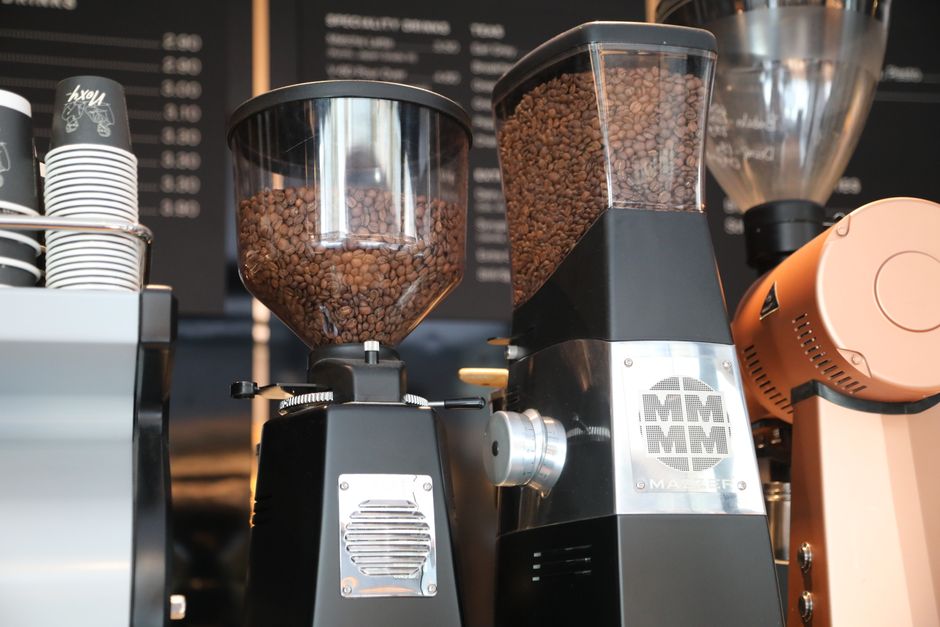
Burr grinders use two rotating grinding surfaces—either flat plates or conical shapes—that crush coffee beans uniformly into consistent-sized particles. You control the exact grind size by adjusting the distance between the burrs. This precision is what specialty coffee shops use because uniform particle size means even water extraction and superior flavor.
Burr grinders take longer than blade grinders (typically 30-60 seconds for a single cup's worth) and cost more upfront, but they produce less dust, less heat (which can damage coffee flavor), and deliver repeatable results every time you brew.
Best for: Coffee enthusiasts who care about flavor consistency, specialty brewing methods (pour-over, French press, espresso), and are willing to invest in equipment quality.
Blade grinders use a propeller-like spinning blade that randomly chops beans into varying sizes. They're fast (10-15 seconds), cheap, and take up minimal counter space. The trade-off is inconsistency: you get a mix of fine dust, medium grounds, and larger chunks in the same batch, which leads to uneven extraction and less flavorful coffee.
Blade grinders generate heat as they work, which can degrade the volatile flavor compounds in coffee. They also can't produce the fine, consistent grounds needed for espresso machines.
Best for: Budget-conscious buyers, casual coffee drinkers who prioritize speed and convenience over flavor nuance, or as a temporary solution while saving for a burr grinder.
Drip coffee makers heat water to approximately 195-205°F and rely on gravity to slowly pull it through a filter basket containing medium-ground coffee. This passive process takes 5-10 minutes and produces a larger volume of milder coffee (typically 4-12 cups). The filter removes oils and fine particles, resulting in a cleaner cup with less body.
Drip makers are simple, affordable, require minimal skill, and are ideal for brewing multiple cups at once. They're the most common home brewing method and work well with medium-grind coffee from either a burr or blade grinder.
Best for: Households that drink multiple cups daily, people who value simplicity and hands-off brewing, and budget-conscious buyers who don't need specialty coffee drinks.
Espresso machines use an electric pump (or manual lever) to force 9-15 bars of pressure (130-220 PSI) through tightly packed, finely ground coffee in just 25-30 seconds. This high-pressure extraction creates a concentrated shot with a distinctive crema layer on top and intense, complex flavor. Espresso is the base for lattes, cappuccinos, macchiatos, and other specialty drinks.
Espresso machines require finely ground coffee (which only burr grinders can produce consistently), proper tamping technique, and regular maintenance. They're more expensive than drip makers and have a steeper learning curve, but they unlock an entire category of coffee drinks.
Best for: Coffee enthusiasts who love specialty drinks (lattes, cappuccinos), people with access to a quality burr grinder, and those willing to invest time in learning proper technique.
The best choice depends on your coffee habits and priorities. If you drink multiple casual cups daily and want simplicity, a drip coffee maker with a blade grinder is affordable and adequate. However, upgrading to a burr grinder with your drip maker immediately improves flavor with minimal added complexity.
If you're a coffee enthusiast or want specialty drinks, a burr grinder is non-negotiable—it's the single biggest flavor improvement you can make. Pair it with either a drip maker (for volume and simplicity) or an espresso machine (for intensity and specialty drinks). Don't buy an espresso machine without a burr grinder; the inconsistent grind from a blade grinder will make espresso nearly impossible to dial in.
In summary: burr grinder + drip maker for flavor-conscious regulars, or burr grinder + espresso machine for specialty drink lovers. Avoid pairing either grinder with an espresso machine without understanding that grind consistency is critical to espresso success.
Technically yes, but not practically. Espresso requires a fine, consistent grind that only a burr grinder can produce. A blade grinder's uneven particle sizes will result in poor extraction, channeling, and weak, bitter shots. If you want espresso, invest in a burr grinder first.
A burr grinder with adjustable settings so you can dial in different grind sizes—medium for drip, fine for espresso. This single grinder handles both methods. Some burr grinders have preset options for different brew methods, making switching between them easy.
Blade grinders range from $15-40. Quality burr grinders start around $50-75 for entry-level models and can exceed $200 for premium versions. For most home use, a mid-range burr grinder ($75-150) offers the best value and performance improvement over blade grinders.
Drip makers are better for everyday casual use—they're faster to set up, brew hands-off, and make multiple cups without technique. Espresso machines require more attention and skill but reward you with specialty drinks. Choose drip for simplicity, espresso for versatility and intensity.
Blade grinder: 10-15 seconds. Burr grinder: 30-60 seconds. Drip maker: 5-10 minutes. Espresso machine: 25-30 seconds to pull a shot (plus grind time). If speed is critical, espresso is fastest at extracting, but drip is more efficient for multiple cups.
Found this helpful? Share it!
Our team reviews cookware, appliances, and kitchen gadgets for home chefs so you don't have to. Every recommendation is based on real research: customer reviews, expert opinions, and value for money. Learn more about us →
This post contains affiliate links. We may earn a commission if you purchase through our links at no extra cost to you.
← Back to Best Kitchen Picks Daily| Retailer | Price Range | Shipping | Link |
|---|---|---|---|
| Amazon | Check Current Price | Free (Prime) | View on Amazon → |
| Walmart | Check Site | Free over $35 | Search → |
| Target | Check Site | Free over $35 | Search → |
Prices may vary. Click through to each retailer for current pricing.