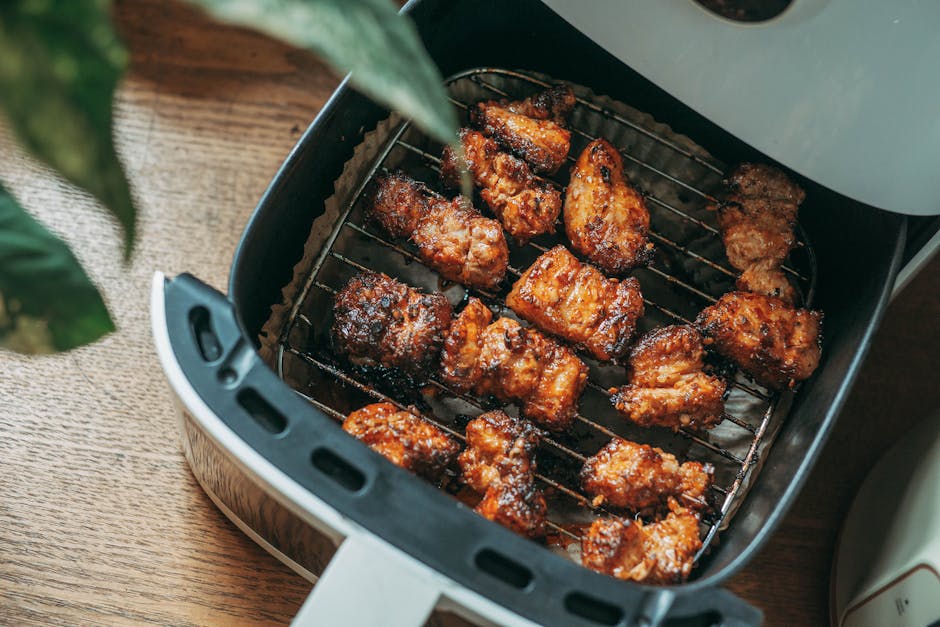
Photo: FOX ^.ᆽ.^= ∫ / Pexels
Air fryers vary dramatically in design and capability—and choosing the wrong type wastes money and kitchen space. A compact 3-quart model excels for cooking chicken wings solo but fails when you need to batch-cook frozen fries. A dual-basket fryer lets you cook two foods simultaneously, but only if both baskets heat independently. A convection model with 1500+ watts handles frozen foods evenly, but takes up significantly more counter real estate.
Rather than picking one "best" air fryer, you need to match the right design to your actual cooking habits. This guide compares the major air fryer types—compact, dual-basket, large-capacity convection, and specialty designs—with specific performance trade-offs so you can choose one that fits your kitchen and needs.
Consider the actual cooking basket dimensions rather than just the advertised capacity, as many air fryers use inflated volume measurements that don't reflect how much food can realistically fit without blocking air circulation. Measure your kitchen counter space before purchasing, since even compact models typically need at least 6-8 inches of clearance on all sides for proper ventilation and heat dissipation.
Compact models are designed for small households or limited counter space, typically holding 2–4 quarts and cooking a single batch of wings (1.5–2 pounds) in one layer. They require 1400W+ power and reach at least 400°F to crisp wings evenly without soggy interiors. The trade-off: you cannot batch-cook large volumes or prepare multiple dishes simultaneously without running successive cooking cycles.
Best specs to look for: adjustable temperature control with 5-minute timer increments, easy-to-clean non-stick baskets, and a design that prevents crowding (which reduces crispiness and forces mid-cook shaking).
Best for: Solo cooks, couples, and households with very limited counter space who cook small portions of wings or fresh foods and don't mind sequential cooking.
Dual-basket models allow you to cook two different foods at the same time—chicken wings at 400°F and vegetables at 375°F simultaneously—or double a single recipe. However, not all dual-basket models support independent temperature and time settings; some budget versions force matching temperatures for both baskets, which defeats the purpose of having two separate compartments. Each basket should hold at least 4 quarts and the unit should deliver 1700–1800 watts minimum to maintain even heat distribution between compartments.
Critical requirement: verify that both baskets heat independently and allow different cooking times. Check customer reviews specifically for heat distribution complaints, as many budget dual-basket models cook unevenly or create cold spots between baskets.
Best for: Families cooking different meal components simultaneously, or households where members want different foods (wings for one, vegetables for another) without waiting for sequential cycles.
Larger models accommodate bigger batches and are essential for frozen food cooking, which requires more space and airflow. A 5.5+ quart capacity with 1400+ watts of power prevents undercrowding—a major issue with frozen items, which need consistent heat circulation. Look for perforated baskets (not solid bottoms) with vents designed to let hot air reach all sides simultaneously, preventing cold spots in the center of frozen fries or breaded chicken.
These models occupy more counter space but excel at handling frozen vegetables, fries, wings, and prepared meals in single batches, eliminating the need for mid-cook shaking or multiple runs.
Best for: Large households, meal-prep enthusiasts, and anyone cooking frozen foods regularly who has adequate counter or storage space and wants to avoid batch cooking.
Convection models use dual heating elements or advanced fans to circulate hot air uniformly throughout the cooking chamber, which is essential for frozen foods that develop soggy centers or cold spots with single-fan designs. These units should have 1500–1700 watts of power, reach 400°F+, and include a dedicated preheat function. Multiple rack levels allow you to adjust spacing and prevent overcrowding, which compromises even heat distribution.
The premium on convection comes from the enhanced heating architecture; they cost more than standard models but deliver significantly more consistent results with frozen items and large batches.
Best for: Cooks who prioritize frozen foods, large households requiring consistent results across multiple racks, and anyone willing to invest in durability and even cooking performance.
Some models emphasize ceramic or PTFE-free non-stick coatings specifically designed to withstand repeated frozen-food cooking without degradation. Budget models often have coatings that wear away within months of regular use, causing food to stick and requiring more oil or cleaning effort. High-durability non-stick baskets are particularly valuable if you cook frozen items (which can scratch coatings) more than once per week.
These models typically combine large capacity (5.5+ quarts) with robust non-stick technology, making them ideal for longevity if you cook frozen foods regularly.
Best for: Frequent frozen-food cooks who want a durable, low-maintenance basket that resists wear and doesn't degrade after 6–12 months of regular use.
Choose compact models (2–4 quarts) if you cook solo or for two and have limited space. They're fast, affordable, and perfect for wings and fresh foods. You'll sacrifice batch capacity, but that's acceptable if you eat smaller portions or cook daily.
Choose a dual-basket fryer only if it explicitly supports independent temperature and time settings. The appeal is real—cooking wings and vegetables simultaneously saves 20–30 minutes on meal prep—but many budget models lock both baskets to matching temperatures, eliminating that benefit. Verify this feature in customer reviews before buying.
Choose large-capacity (5.5+ quart) or convection models if you cook frozen foods more than once per week. Frozen items demand consistent heat distribution and adequate airflow; underpowered or single-fan designs leave cold centers and soggy edges. The extra wattage (1500–1700W) and convection airflow are worth the higher price and counter space for this use case.
Prioritize high-durability non-stick coatings if you cook frozen foods regularly. Budget non-stick degrades rapidly with frozen items, forcing you to replace the unit or use more oil within a year. Ceramic or PTFE-free coatings cost more upfront but outlast cheaper alternatives by 2–3 years, making them the better long-term investment.
Yes. Frozen items require sustained high heat to thaw and cook simultaneously without burning the exterior. Models under 1400W extend cooking times significantly and often leave cold centers. You'll see this problem consistently in reviews of underpowered models used for frozen fries or breaded chicken.
Convection models use dual heating elements or advanced fans to circulate hot air uniformly; standard models use a single heating element and fan. Convection prevents cold spots and is essential for frozen foods or large batches. Standard models are adequate for fresh foods and small portions.
Technically yes, but it's inefficient. Compact models (2–4 quarts) crowd frozen items, reducing airflow and creating uneven cooking. You'll either need to batch-cook multiple runs or accept cold centers. For regular frozen-food cooking, a 5.5+ quart model is more practical.
Many budget dual-basket models lock both baskets to the same temperature and cooking time, defeating the purpose of having two separate compartments. Always verify in product specs or reviews that the model supports independent temperature and time controls before buying.
Budget non-stick coatings degrade within 6–12 months with regular frozen-food cooking. Higher-quality ceramic or PTFE-free coatings last 2–3 years or longer. If you cook frozen foods more than once per week, investing in durability upfront saves money on replacement.
Found this helpful? Share it!
Our team reviews cookware, appliances, and kitchen gadgets for home chefs so you don't have to. Every recommendation is based on real research: customer reviews, expert opinions, and value for money. Learn more about us →
This post contains affiliate links. We may earn a commission if you purchase through our links at no extra cost to you.
← Back to Best Kitchen Picks Daily| Retailer | Price Range | Shipping | Link |
|---|---|---|---|
| Amazon | Check Current Price | Free (Prime) | View on Amazon → |
| Walmart | Check Site | Free over $35 | Search → |
| Target | Check Site | Free over $35 | Search → |
Prices may vary. Click through to each retailer for current pricing.