By Best Kitchen Picks Daily • July 21, 2026 • Contains affiliate links
Affiliate Disclosure: As an Amazon Associate, we earn from qualifying purchases. Clicking our links costs you nothing extra and helps us keep reviewing products for free.
The kitchen appliance aisle has gotten crowded with claims about air fryers being faster, crispier, and more efficient than traditional ovens. But the reality is more nuanced. Both air fryers and convection ovens use rapidly circulating hot air to cook food faster than conventional methods—the difference lies in scale, intensity, and what you're actually trying to cook.
This guide cuts through the marketing to compare these appliances directly: how they actually perform, their real limitations, energy consumption, and which one (or both) makes sense for your household.
If you cook for one or two people and have limited counter space, an air fryer is the more practical choice since it preheats faster and uses less energy than a convection oven, but if you regularly cook for larger groups or need to prepare multiple dishes simultaneously, a convection oven's larger capacity makes it the better investment.
Compact Air Fryers (1500–1800W models)
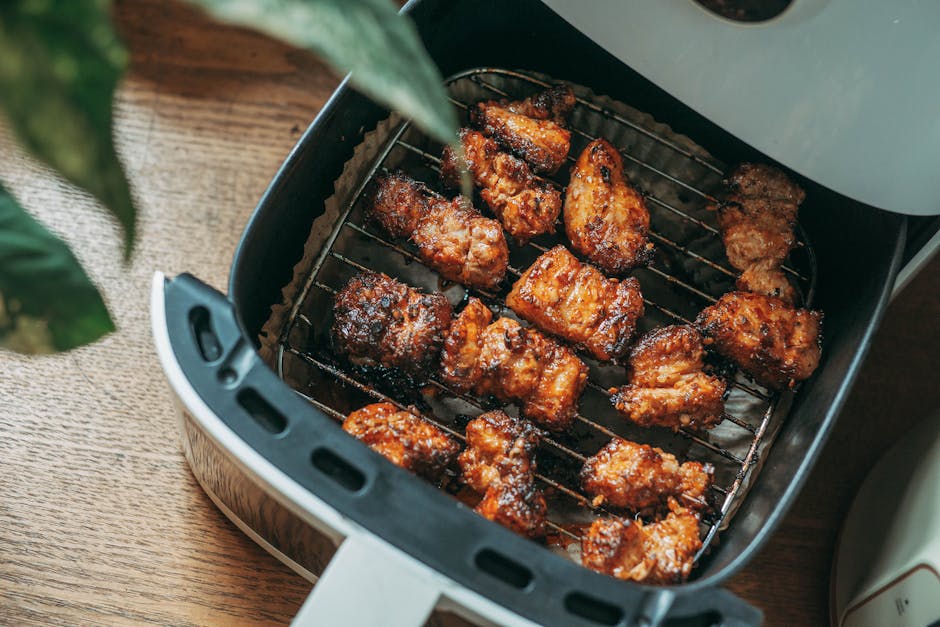
High-powered air fryers typically operate between 1500–1800W and feature compact cooking chambers that concentrate heat circulation intensely. They preheat in 2–3 minutes and cook most foods 20–30% faster than traditional ovens. Basket or tray capacities typically serve 1–4 people per batch. These models excel at producing crispy exteriors on foods like chicken wings, fries, and reheated items because the concentrated airflow creates better texture.
Best for: Singles, couples, or small households cooking quick weeknight meals; anyone prioritizing crispiness and speed over batch cooking.
Full-Size Convection Ovens
Convection ovens maintain a larger internal chamber with more even heat distribution across multiple racks. They handle simultaneous cooking of multiple dishes and excel at traditional baking tasks where uniform heat matters. Preheating typically takes 10–15 minutes, but once hot, they can accommodate family-size portions and batch cooking in a single cycle. They're more versatile for varied cooking tasks beyond frying.
Best for: Families cooking regular multi-person meals; bakers; anyone needing to prepare multiple dishes or large quantities simultaneously.
Lower-Wattage Air Fryers (Under 1500W)
Budget air fryers with lower wattage output still use air circulation technology but heat more gradually and cook less dramatically faster than high-powered models. They often have smaller baskets and may not deliver the speed or crispiness advantages of premium units. Performance variability is higher—advertised cooking times may not match real-world results.
Best for: Budget-conscious buyers; occasional users who don't need premium performance; kitchens with severe space constraints.
Convection Countertop Ovens (Smaller format)
Countertop convection models bridge the gap—larger than air fryers but more compact than full-size ovens. They offer more capacity than air fryers while remaining manageable in size. However, they don't match the speed of high-powered air fryers or the versatility of full-size convection ovens, making them a middle-ground option with trade-offs.
Best for: Users with limited counter space but who need more capacity than an air fryer; those wanting convection versatility without a full oven footprint.
Pros & Cons
Pros
✓ Air fryers preheat in 2–3 minutes vs. 10–15 minutes for traditional ovens—dramatic time savings for impatient cooks.
✓ High-wattage air fryers (1500–1800W) cook 20–30% faster and produce noticeably crispier textures due to intense heat concentration.
✓ Convection ovens handle larger portions and multiple dishes simultaneously without compromising cooking quality.
✓ Air fryers use less total energy per meal due to smaller chamber size and faster cooking times.
✓ Convection ovens distribute heat more evenly, making them more reliable for precision baking tasks.
Cons
✗ Air fryer basket or tray capacity limits you to 1–4 servings per batch; large families require multiple cooking cycles.
✗ Lower-wattage air fryers don't deliver advertised speed advantages and have high performance variability.
✗ Convection ovens take significantly longer to preheat and reach temperature, adding wait time before cooking starts.
✗ Air fryers may not cook large items (whole chickens, sheet pan meals) as effectively due to size constraints.
✗ Wattage and heating element design vary widely; advertised cooking times don't always match real-world results across models.
Our Verdict
The winner depends entirely on your cooking patterns. If you're cooking for 1–4 people most nights and value speed and crispiness, a high-wattage air fryer (1500–1800W) is the better buy. Preheat times of 2–3 minutes and consistent 20–30% faster cooking significantly reduce dinner prep time. The trade-off is batch capacity—you'll need multiple rounds for larger groups.
If you regularly cook for families, bake, or prepare multiple dishes simultaneously, a full-size convection oven is the practical choice despite longer preheating. It handles sheet pan meals, multiple racks of food, and varied cooking tasks that air fryers can't manage. Convection ovens also distribute heat more evenly, which matters for consistent baking results.
Budget-conscious shoppers should be cautious: lower-wattage air fryers (under 1500W) don't reliably deliver speed or crispiness advantages and have variable performance. Spending more upfront on a 1500–1800W model yields genuinely noticeable improvements. Countertop convection models split the difference but excel at neither speed nor capacity, making them best for niche space-constrained scenarios.
For most households, the answer isn't either/or—it's recognizing what each appliance actually does well and buying accordingly.
Frequently Asked Questions
Do air fryers really cook 20–30% faster than ovens?
Yes, but with caveats. High-wattage models (1500–1800W) consistently deliver this speed advantage due to compact chamber size and intense heat circulation. Lower-wattage air fryers show less dramatic improvements. Traditional ovens take 10–15 minutes just to preheat, while air fryers preheat in 2–3 minutes—that alone represents significant time savings before cooking even starts.
Why do air fryers make food crispier?
The concentrated airflow in a compact chamber creates rapid moisture evaporation and browning. Convection ovens distribute heat more evenly across a larger space, which is better for even cooking but less aggressive for crisping. Air fryers' intensity is their advantage for texture but a disadvantage for delicate items or large batches.
Should I check wattage when comparing air fryer models?
Yes, absolutely. Wattage directly affects preheating speed and cooking performance. Models rated 1500–1800W significantly outperform lower-wattage units. Don't rely solely on advertised cooking times—check the actual wattage and heating element design, as these are more reliable predictors of real-world performance than marketing claims.
Can I use an air fryer for baking?
Air fryers can handle some baking tasks like cookies or quick breads, but they're not ideal. Their intense, concentrated heat can brown exteriors unevenly before centers cook through. Convection ovens distribute heat more uniformly, making them the better choice for consistent baking results.
What if I want an air fryer but cook for a large family?
You'll need to run multiple cooking cycles, which can be inconvenient. Some households solve this by owning both appliances—air fryer for quick weeknight meals and a convection oven for family dinners and batch cooking. Alternatively, a countertop convection model offers more capacity than an air fryer, though it sacrifices some speed advantage.
Our team reviews cookware, appliances, and kitchen gadgets for home chefs so you don't have to. Every recommendation is based on real research: customer reviews, expert opinions, and value for money. Learn more about us →
This post contains affiliate links. We may earn a commission if you purchase through our links at no extra cost to you.