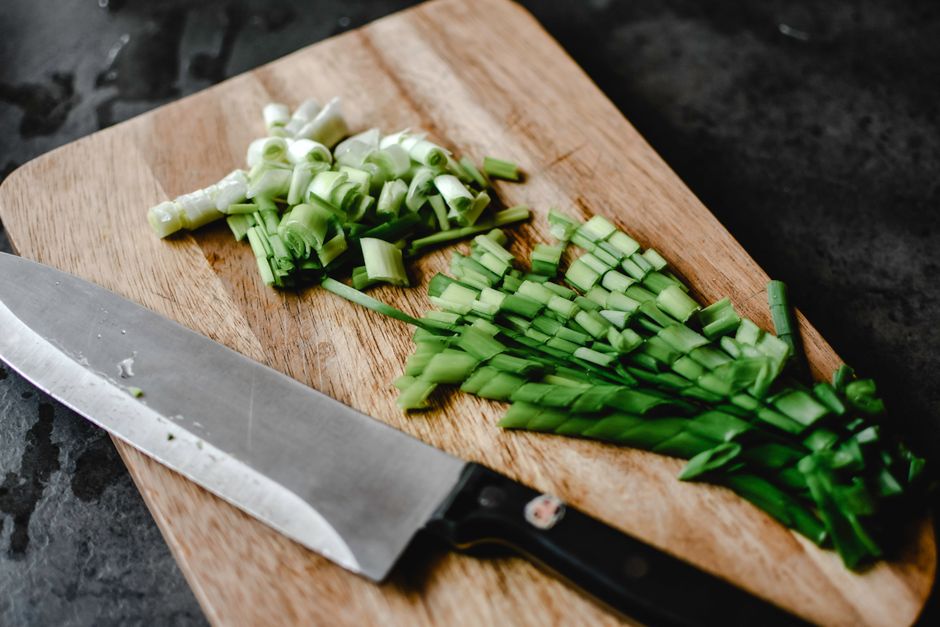
Photo: Eva Bronzini / Pexels
Found this helpful? Share it!
Our team reviews cookware, appliances, and kitchen gadgets for home chefs so you don't have to. Every recommendation is based on real research: customer reviews, expert opinions, and value for money. Learn more about us →
Look for a chef's knife with a blade angle of 15-20 degrees and a high carbon stainless steel construction, as these specifications deliver superior sharpness and edge retention specifically for vegetable chopping tasks. Test the knife's weight distribution in your hand before purchasing, since a well-balanced blade between 8-10 inches requires less pressure and maintains its sharpness longer during frequent use on cutting boards.
A sharp chef's knife (8-inch) is the best option for chopping vegetables, as it combines superior edge retention, optimal blade length, and versatile cutting performance. High-carbon stainless steel or German-style blades hold their sharpness longest and deliver the cleanest cuts through all vegetable types.
The sharpest kitchen knives for vegetable chopping are chef's knives made from high-carbon stainless steel or Damascus steel, typically 8 inches long. These blades maintain their edge longer than other kitchen knives and handle everything from delicate herbs to hard squash. A sharp chef's knife requires less pressure, making your chopping safer and faster. Regular honing and proper maintenance keep your blade in peak cutting condition.
Why Chef's Knives Win for Vegetables
Chef's knives are purpose-built for vegetable prep. The 8-inch blade length gives you enough surface area to use proper rocking motion for herbs and efficient slicing for larger vegetables. The slight curve to the blade, called the belly, naturally guides the knife through your cutting motions with minimal effort. When sharp, this design requires just the weight of the blade to slice through tomatoes, onions, carrots, and peppers cleanly—without crushing or bruising the vegetable tissues.
Steel Types That Stay Sharpest
High-carbon stainless steel blades hold their edge 3-4 times longer than standard stainless steel. This steel composition contains higher carbon content, which allows for a thinner, more acute edge angle (typically 15-20 degrees versus 20-22 degrees on regular stainless). German-style blades tend to be slightly thicker and more durable for heavy chopping, while Japanese-style blades are thinner and maintain sharper edges for more delicate work.
Edge Sharpness Measurement
Professional kitchen knives typically achieve edges between 1,000-3,000 grit levels out of the factory. This translates to a blade sharp enough to cut a tomato skin without pressure or to easily slice through a piece of paper. Consumer-grade chef's knives usually ship at 800-1,000 grit, which is still suitable for vegetable work but may require earlier maintenance.
Professional chefs universally recommend maintaining a sharp chef's knife as the single most important investment for any home cook. Chef Thomas Keller emphasizes that a dull knife is more dangerous than a sharp one, as it requires excessive pressure that can slip and cause accidents. Culinary schools teach that a properly sharpened chef's knife should easily slice a ripe tomato with just the blade's weight—no downward pressure needed. Food scientists confirm that sharp knives create cleaner cuts that preserve vegetable cell structure, maintaining flavor, texture, and nutritional content better than crushing cuts from dull blades.
A quality chef's knife is the foundation of efficient vegetable prep. The right blade handles everything from mincing garlic to julienning carrots to rough-chopping cabbage. Look for high-carbon stainless steel construction, comfortable ergonomic handles, and a blade that feels balanced in your hand. Many home cooks find that investing in one excellent knife they maintain regularly outperforms owning multiple mediocre knives.
Browse chef's knives on Amazon to compare options across price points, blade materials, and handle styles to find your perfect fit.
| Retailer | Price Range | Shipping | Link |
|---|---|---|---|
| Amazon | Check Current Price | Free (Prime) | View on Amazon → |
| Walmart | Check Site | Free over $35 | Search → |
| Target | Check Site | Free over $35 | Search → |
Prices may vary. Click through to each retailer for current pricing.
Video results for: What Is The Sharpest Kitchen Knife For Chopping Vegetables (2026)
A chef's knife (8-inch) is the best all-purpose choice for chopping vegetables due to its sharp, wide blade and balanced weight. If you prefer something more specialized, a nakiri knife (Japanese vegetable knife) excels at precise vegetable work with its rectangular blade and superior edge retention.
German stainless steel holds an edge well and resists rust, but Japanese high-carbon stainless steel (like VG-10 or AUS-8) stays sharper longer and is easier to maintain. Damascus or layered steel offers both durability and edge retention, though it requires more careful maintenance.
Your knife should be sharp enough to slice a tomato skin cleanly without pressure or to cut through a bell pepper with minimal effort. A dull knife is dangerous because it requires more force and is more likely to slip; you should sharpen your vegetable knife every 3-6 months depending on use.
A smooth blade is better for most vegetables because it creates cleaner cuts and doesn't crush delicate produce like tomatoes or herbs. Serrated blades are only useful for very hard vegetables or produce with tough skins, and they're harder to maintain sharp.