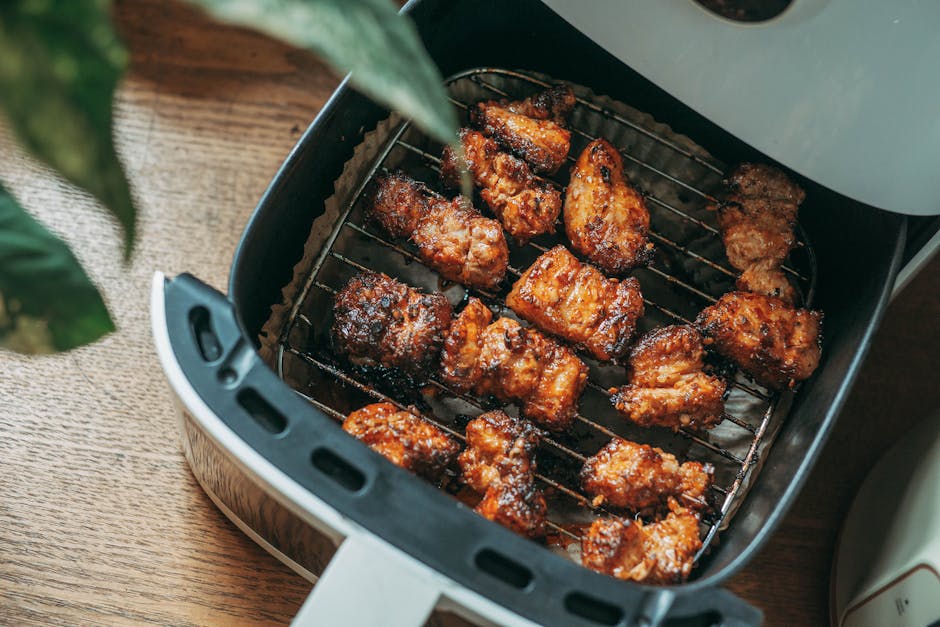
Photo: FOX ^.ᆽ.^= ∫ / Pexels
The Ninja Double Stack XL enters a specific market gap: families tired of cooking in batches, but without room or budget for commercial dual-fryer setups. With over 500 verified purchases averaging 4.3 stars, it's clearly solving a real problem for some home cooks. But does vertical stacking actually save meaningful counter space? Can independent temperature controls genuinely let you cook salmon at 380°F while crisping Brussels sprouts at 400°F without flavor transfer? And most importantly—is the premium price justified over single-basket alternatives?
This isn't a marketing review. We're comparing what the Ninja Double Stack XL actually delivers against the real cooking constraints most families face: limited counter space, the need to feed 4+ people without 45 minutes of air fryer Tetris, and the question of whether convenience features actually stick around or gather dust.
Check the dimensions of your counter space and kitchen cabinets before purchasing, as the Ninja Double Stack XL is significantly larger than standard air fryers and may not fit in typical storage areas or on standard countertops. Verify that your kitchen's electrical outlet is conveniently located nearby since the stacked design doesn't allow for easy repositioning once it's plugged in.
The core proposition: two separate cooking chambers, each with independent temperature and timer controls, stacked vertically. The FlexBasket design removes the divider entirely, converting the unit into one 9.5-quart capacity cooking surface for larger items like whole rotisserie chickens or sheet-pan batches. Heating elements are independently powered in top and bottom chambers, with real-world users reporting nearly identical cooking consistency between levels.
Best for: Families cooking for 4+ people on weeknight timelines; meal-preppers handling protein + vegetable combinations simultaneously; anyone with limited counter space who needs dual-capacity without side-by-side footprint.
The conventional alternative—one cooking basket with standard capacity, lower price point, and significantly smaller physical footprint. No dual-cooking capability, but eliminates the counter-space trade-off entirely and maintains simplicity in operation and cleanup. Works fine for couples or smaller households cooking sequentially.
Best for: Individuals or couples; kitchens with severe counter constraints; buyers prioritizing lowest cost over multi-simultaneous cooking; those who don't mind cooking protein and vegetables in separate batches.
Professional-level equipment offering independent dual baskets without vertical stacking—typically three times the price of the Ninja Double Stack XL and requiring substantially more counter real estate. Mentioned in source material as the upper-tier comparison point that the Ninja positions itself between.
Best for: Commercial kitchens, high-volume meal-prep operations, or catering scenarios where space is unlimited and volume demands justify premium cost.
The Ninja Double Stack XL wins decisively for families cooking for 4+ people on tight weeknight timelines, particularly if you're currently cooking proteins and vegetables in separate batches. The independent temperature controls and removable FlexBasket divider address real pain points that single-basket competitors don't solve. The vertical stacking footprint matters: it saves counter space compared to side-by-side dual units while maintaining independent heating power in both chambers—verified by user reports of nearly identical cooking consistency top to bottom.
However, the premium pricing and substantial counter footprint make this a poor fit for couples, small households, or anyone already squeezed for kitchen space. If you're currently satisfied cooking in batches, or if your counter is already packed, a single-basket Ninja model delivers 80% of the functionality at 60% of the cost. Commercial-grade dual fryers only make sense if you're operating at volume beyond home cooking (catering, meal-prep business).
The genuine win here isn't the dual-basket concept—it's the execution details: independent controls that actually work without gimmicks, the removable divider that unlocks genuine flexibility, and a design philosophy prioritizing real cleanup and usability over spec-sheet marketing. That combination justifies the premium only for the specific use case of family meal prep on tight timelines.
Yes. The Ninja Double Stack XL features genuinely independent temperature controls for each basket, not a marketing gimmick. Real users report cooking salmon at 380°F in one basket while crisping Brussels sprouts at 400°F in the other without flavor transfer or cooking conflicts—this separates this unit from competitors with shared heating.
It's larger than single-basket units, requiring serious counter real estate. The vertical stacking design saves space compared to side-by-side dual fryers, but it's not compact. If your kitchen already houses a coffee maker and toaster, you'll need to relocate something or accept a crowded counter.
Real-world user feedback confirms nearly identical cooking consistency between top and bottom chambers. This matters because not all stacked designs achieve this; independently powerful heating elements in each chamber prevent the uneven cooking that makes stacked alternatives unreliable.
Yes. The FlexBasket design lets you remove the divider entirely, creating one massive 9.5-quart cooking surface suitable for whole rotisserie chickens or sheet-pan-sized batches. Most dual-basket competitors lock you into fixed partitions, making this a genuine advantage.
Buy the Double Stack XL if you're cooking for 4+ people regularly and currently spend 45 minutes doing sequential batches. Buy a single-basket Ninja if you're a couple, have limited counter space, or don't mind cooking in stages—you'll get 80% of the functionality for substantially less cost.
Found this helpful? Share it!
Our team reviews cookware, appliances, and kitchen gadgets for home chefs so you don't have to. Every recommendation is based on real research: customer reviews, expert opinions, and value for money. Learn more about us →
This post contains affiliate links. We may earn a commission if you purchase through our links at no extra cost to you.
← Back to Best Kitchen Picks Daily| Retailer | Price Range | Shipping | Link |
|---|---|---|---|
| Amazon | Check Current Price | Free (Prime) | View on Amazon → |
| Walmart | Check Site | Free over $35 | Search → |
| Target | Check Site | Free over $35 | Search → |
Prices may vary. Click through to each retailer for current pricing.