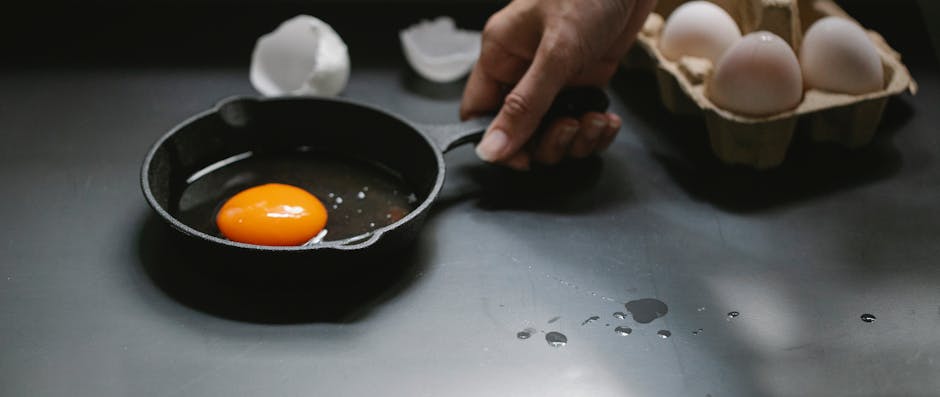
Photo: Klaus Nielsen / Pexels
Found this helpful? Share it!
Our team reviews cookware, appliances, and kitchen gadgets for home chefs so you don't have to. Every recommendation is based on real research: customer reviews, expert opinions, and value for money. Learn more about us →
Always test the heat distribution on a cast iron skillet before purchase by running your hand above the surface after preheating to ensure it heats evenly, as cheaper models often develop hot spots that can burn food unevenly. Look for skillets with a smooth cooking surface and consistent weight distribution, as these characteristics indicate better heat retention and more reliable preheating performance.
Yes, preheating a cast iron skillet is essential for optimal cooking results. Preheating ensures even heat distribution, prevents food from sticking, and creates the perfect sear or browning that cast iron is famous for.
Preheating your cast iron skillet for 3-5 minutes on medium to medium-high heat is highly recommended before cooking most foods. This allows the pan to reach an even temperature throughout, preventing hot spots and ensuring consistent cooking. Without preheating, you'll likely experience uneven cooking, sticking, and subpar browning on your proteins and vegetables. It's a simple step that makes a significant difference in your final dish.
Cast iron skillets have unique thermal properties that make preheating particularly important. Unlike stainless steel or non-stick cookware, cast iron takes longer to heat up but retains heat exceptionally well once it reaches temperature. When you preheat, you're allowing the entire cooking surface—not just the bottom—to reach the desired temperature evenly.
Why preheating matters:
How long to preheat: Most cooking requires 3-5 minutes on medium or medium-high heat. For high-heat cooking like searing steaks, allow 5-10 minutes. You can test if it's ready by sprinkling a few drops of water on the surface—they should sizzle and dance across the pan, not puddle or evaporate immediately.
When preheating isn't as critical: For slow-cooking applications like making soups, stews, or braised dishes, preheating is less critical since these foods cook low and slow. However, even a brief preheat (2-3 minutes) helps soften butter and evenly distribute oil.
Professional chefs and cast iron experts universally recommend preheating. The Lodge Cast Iron Company, one of the oldest and most respected cast iron manufacturers in the world, specifically advises preheating to ensure "optimal cooking performance." Food scientists explain that the water droplet test (called the Leidenfrost effect) is the most reliable way to know your skillet is truly ready—this occurs when the pan has reached approximately 300°F, the temperature at which most proteins begin to sear properly.
Chef and cast iron specialist Richard Shih notes that preheating is "non-negotiable" for anyone serious about cast iron cooking. The short investment in preheating time pays dividends in food quality, cooking consistency, and even the longevity of your seasoning, since proper preheating helps maintain the non-stick surface.
Investing in a quality cast iron skillet makes the preheating process worthwhile. Modern cast iron skillets, including vintage and new options, are designed to retain and distribute heat efficiently once properly preheated. Whether you're choosing a classic round skillet
As an Amazon Associate I earn from qualifying purchases.
← Back to All Reviews Shop on Amazon →| Retailer | Price Range | Shipping | Link |
|---|---|---|---|
| Amazon | Check Current Price | Free (Prime) | View on Amazon → |
| Walmart | Check Site | Free over $35 | Search → |
| Target | Check Site | Free over $35 | Search → |
Prices may vary. Click through to each retailer for current pricing.
Yes, preheating your cast iron skillet is essential for even cooking and proper browning. A properly preheated skillet helps food develop a nice crust and prevents sticking, which is especially important for items like steaks, pancakes, and eggs. Most recipes require 3-5 minutes of preheating on medium to medium-high heat.
Cast iron typically needs 3-5 minutes to preheat on the stovetop, depending on your stove's power and the skillet's thickness. You can test if it's ready by flicking a few drops of water onto the surface—if they sizzle and evaporate immediately, the skillet is hot enough. Heavier skillets take longer to heat than lighter ones.
Skipping preheating can result in uneven cooking, pale browning, and food sticking to the surface. Your proteins may cook unevenly with cold spots, and you won't achieve the flavorful crust that makes cast iron cooking so desirable. The food also takes longer to cook overall.
Yes, preheating cast iron in a 400-500°F oven for 15-20 minutes is excellent for dishes like cornbread, pizza, or roasted vegetables. Oven preheating heats the skillet more evenly throughout than stovetop preheating, making it ideal when you want consistent results across the entire cooking surface.